Generative AI
How to choose an AI automation partner (without buying another demo).
The right AI automation partner maps your workflow before writing code, builds for production with tests and a human in the loop, integrates with the systems you already run, and hands you something you own and can measure. The wrong one ships an impressive demo that never survives real data. Seven questions tell the two apart.




The right AI automation partner maps your workflow before writing code, builds for production with tests and a human in the loop, integrates with the systems you already run, and hands you something you own and can measure. The wrong one ships an impressive demo that never survives real data. Seven questions tell the two apart.
We're an AI automation agency, so we're describing the bar we hold ourselves to - and the questions we'd ask if we were hiring one.
1. Do they map the workflow before they quote?
A partner who quotes a build before understanding how your work actually moves is selling you their template, not your solution. The first deliverable should be a map of one real workflow - inputs, exceptions, the point a human decides - not a statement of work full of buzzwords. Automation that skips this just automates a broken process faster.
2. Do they build for production, or for the demo?
Demos are easy. Production is where automation earns its keep - tests, error handling, retries so nothing fires twice, and behavior that holds under real volume. Ask what happens on the unhappy path. If the answer is vague, the automation will break the first week it meets real data.
3. Where does a human stay in the loop?
Good automation isn't unattended by default. It handles the routine and escalates the rest, with sign-off on anything with money, compliance, or risk attached. A partner who promises to remove humans entirely is either overselling or about to cause an expensive incident.
4. Do they integrate with what you already run?
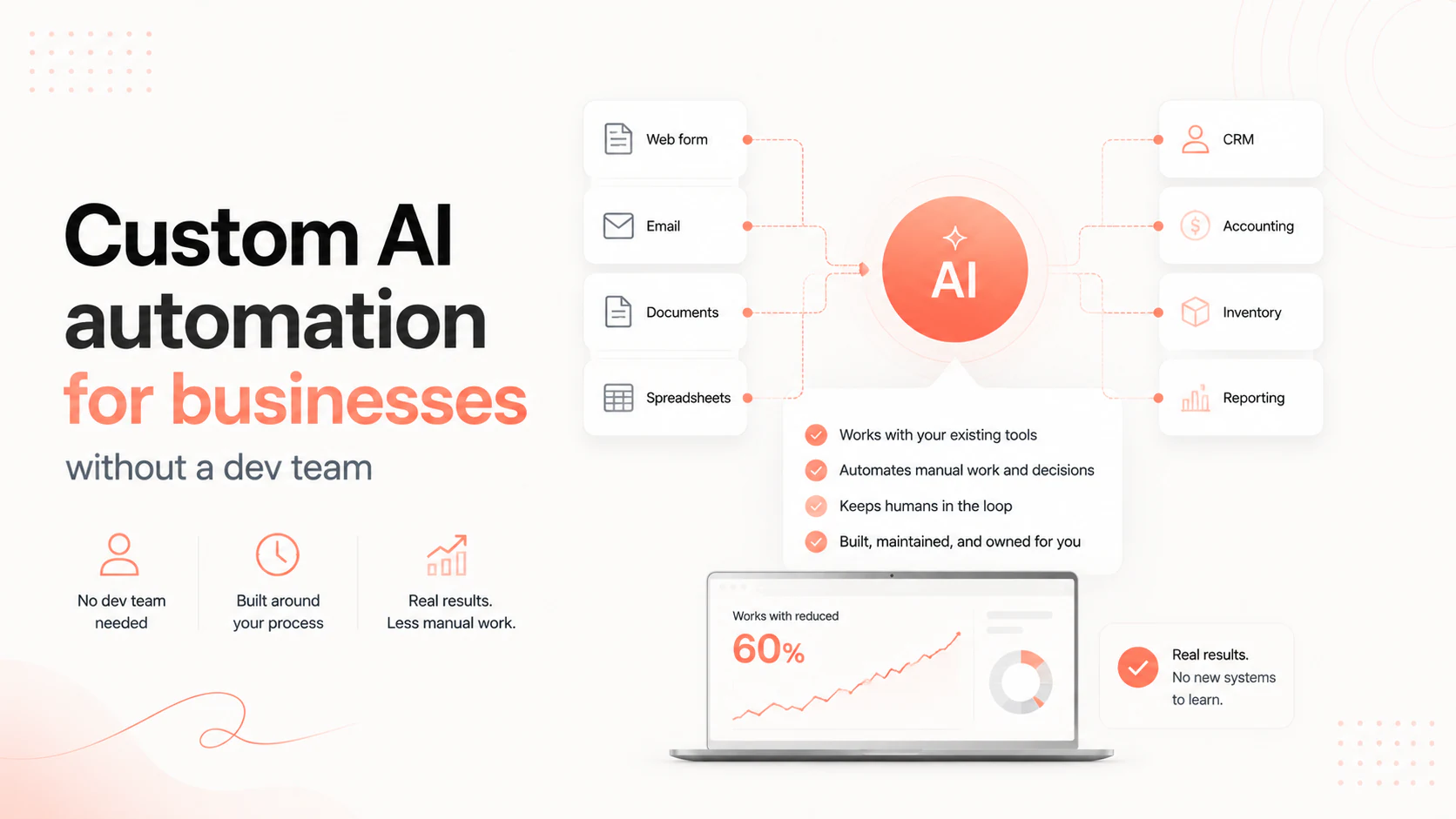
Automation only helps if it acts inside your real systems - CRM, ERP, ticketing, email. A partner who needs you to change tools to fit their platform is solving their problem, not yours. Ask how they handle the systems that don't have a clean API, because some of yours won't.
5. Do you own what they build?
When the engagement ends, do you have the code, the documentation, and the ability to change it - or are you renting a black box? Ownership and a clean handover separate a partner from a dependency. Ask this before you start, not after.
6. How do they price - outcomes or hours?
Hourly billing rewards slow work. Ask for fixed scope against fixed time: this workflow, live, by this date. It aligns their incentive with your result and tells you they've done it before. Open-ended time-and-materials on a first project is a risk you carry.
7. How will you know it worked?
A serious partner takes a baseline before launch and reports against it: time saved, error rate, throughput. "It's live" is not a result. If they can't tell you how success will be measured, they haven't built enough of these to know.
The short version
The partners worth hiring are the ones who start with your workflow, build for the day after the demo, and hand you something you own and can measure. Everyone else is selling the excitement that already peaked.
Whether you need full workflow automation or targeted AI agent development to handle specific decision points, that's the standard we build to. See how we approach AI automation, or tell us the workflow that eats your team's week and we'll map it first.
FAQ
What should an AI automation partner deliver first? A map of one real workflow - inputs, exceptions, and where a human decides - before any code. If the first deliverable is a quote full of buzzwords, that's a warning sign.
AI automation agency vs building it in-house? In-house works if you have senior engineers free to own it long-term. A partner makes sense when you want it shipped on a fixed timeline without pulling your team off the roadmap. Either way, insist on production quality and ownership.
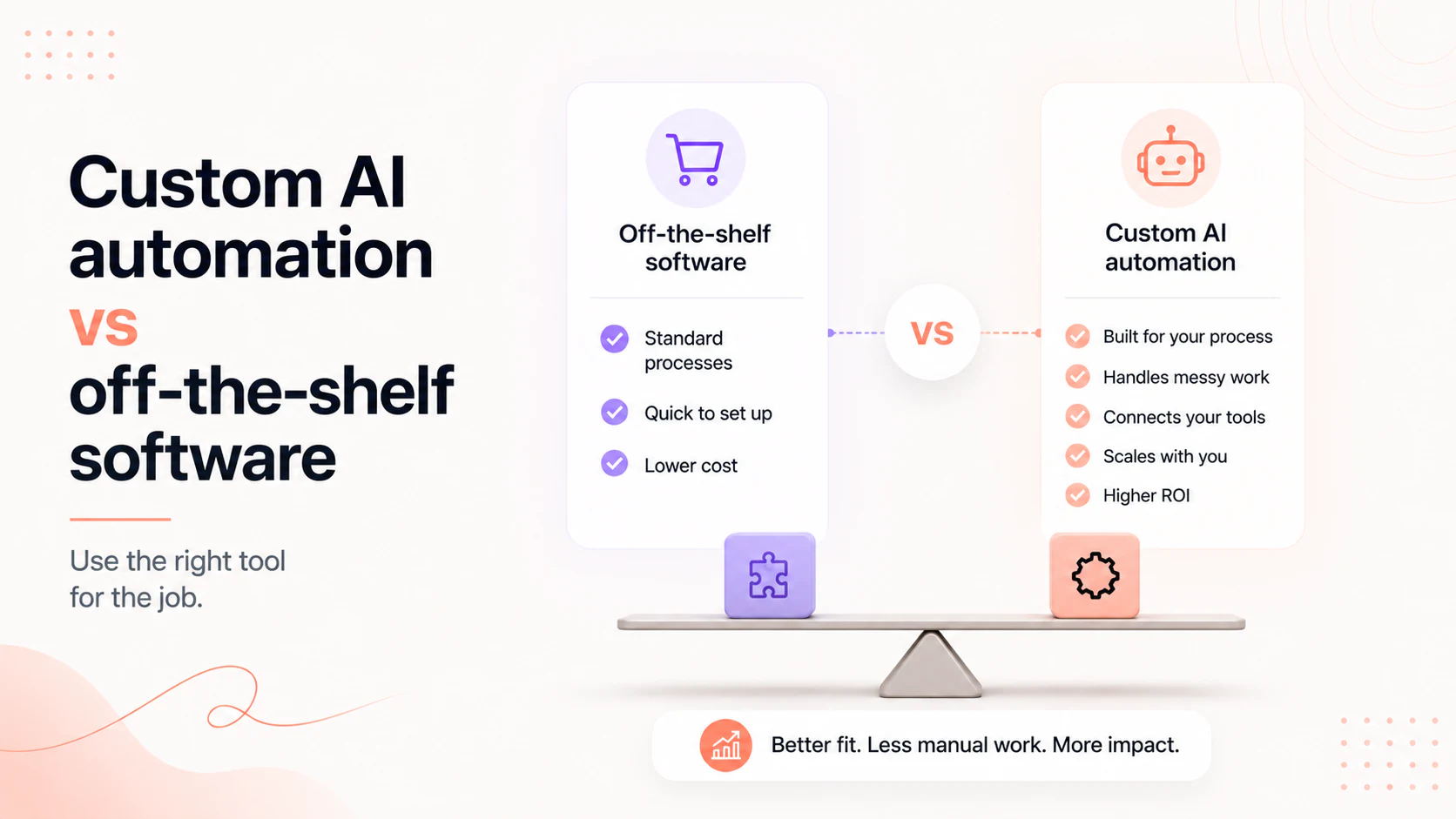
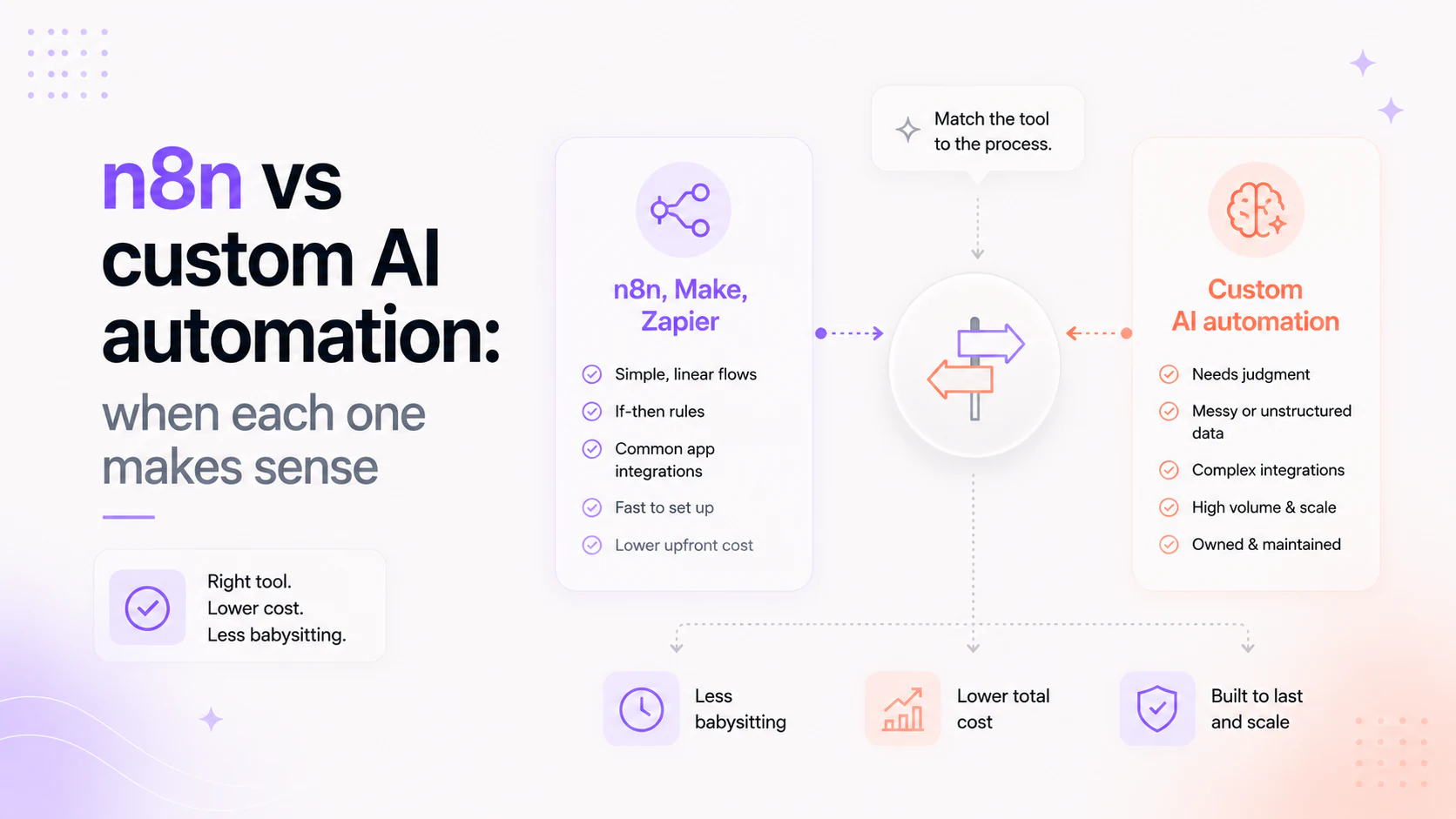
How is custom AI automation different from off-the-shelf tools? Off-the-shelf tools are great until the logic gets real - exceptions, compliance, scale. Then you outgrow them. See custom AI automation vs off-the-shelf software.
How long should a first automation take? Weeks, not quarters. A good partner ships one workflow to production fast, proves it on real volume, then widens scope.
Do you build AI automation and the agents behind it? Yes. We're an AI automation agency and we build the custom agents that power it. See AI automation and AI agent development.
News & Insights
Start here
Bring us the agent that keeps braking
Tell us which workflow eats time, creates errors, or keeps landing back in a human review queue. We map the data, tools, risks, and escalation path before recommending anything.
Tell us the workflow that eats your time. We'll map it, show you a range, and say if automation is even worth it.