Generative AI
How Managed Code builds AI agents that survive production
 5minutes read
How Managed Code builds AI agents that survive production. The stack, the discipline, and why 'it works in the demo' is where our work starts, not ends.




Plenty of teams can demo an AI agent. Managed Code builds the ones that stay running after the demo — in finance, healthcare, and operations, under real load and real rules. This is how we do it: what we build AI agents on, the discipline we put around them, and why "it works in the demo" is where our work starts, not where it ends.
We've shipped AI agents under HIPAA, GDPR, and financial-compliance requirements. A common starting point for us is a promising prototype that isn't safe for real users, real data, or real money yet. Getting it there is the actual job.
What an AI agent has to do before we call it done
At Managed Code, an agent isn't finished when it answers well in a demo. Before it touches a real workflow, it has to carry the production layer that demos skip:
- Confidence scores on every decision, so low-confidence output goes to a human instead of straight through.
- Explicit, testable business rules, and clear limits on what the agent can read versus change.
- An escalation path — the agent knows when to hand off, and a named person receives the case with context.
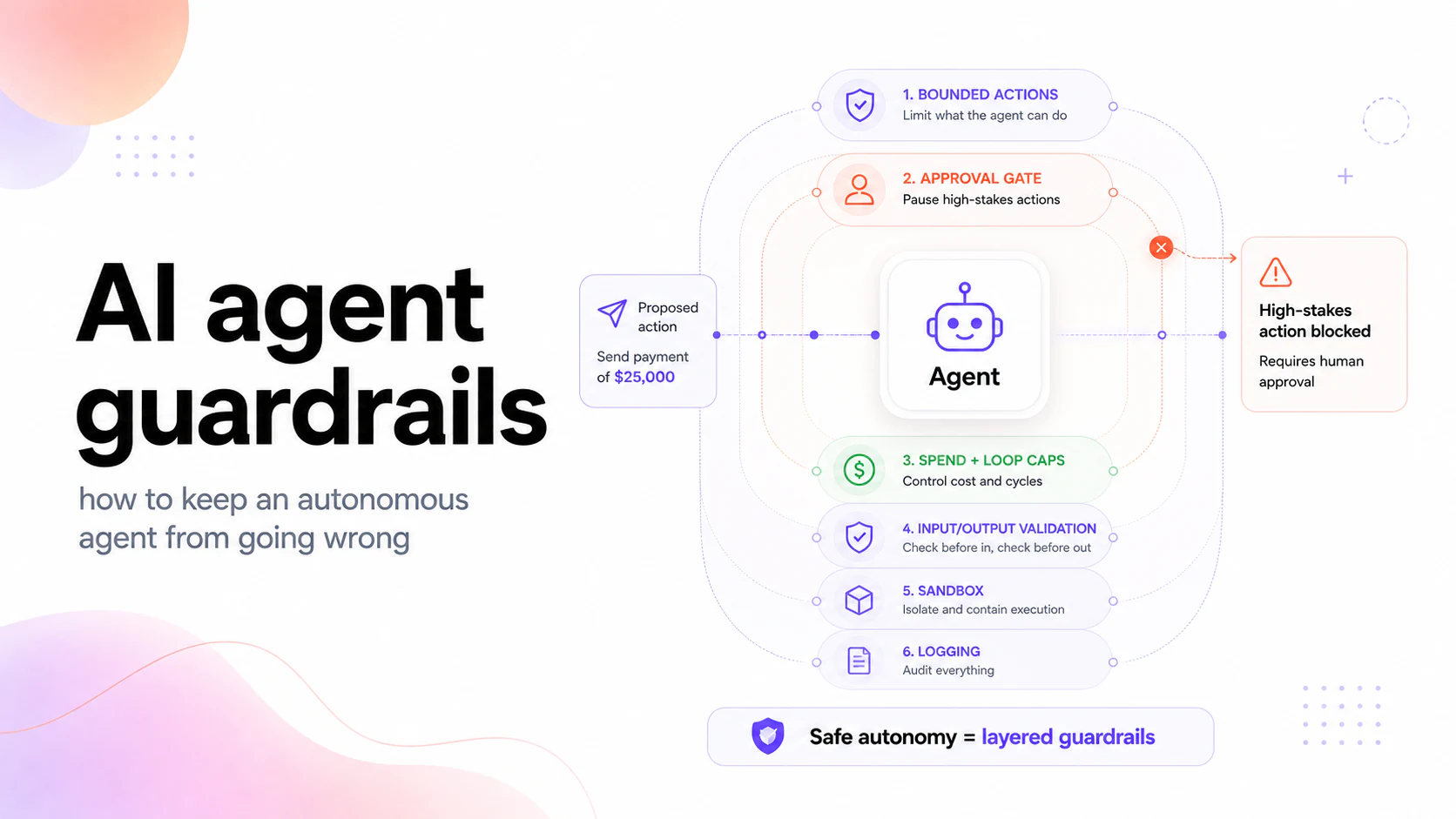
- A full audit trail, guardrails on tools and actions, tests against real edge cases, monitoring, and a rollback measured in minutes.
That list is the difference between an AI agent that impresses and one you can put in front of customers.
The stack we build AI agents on
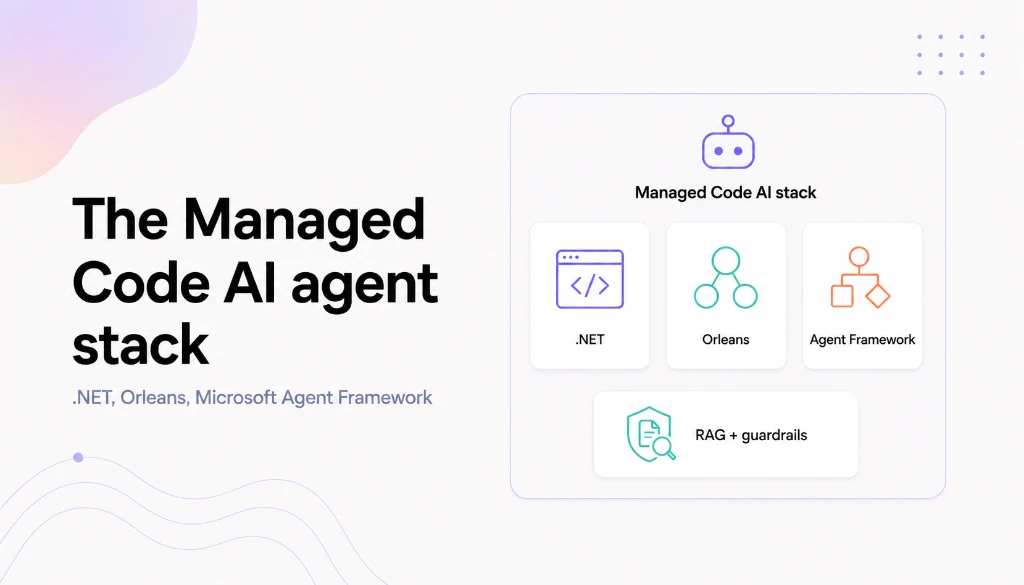
Managed Code builds AI agents on .NET. C# and Orleans give us state and concurrency — the ability to run many agents at once without them stepping on each other — and the Microsoft Agent Framework handles orchestration. Around that sit retrieval (RAG) against approved sources, integrations with the client's real systems, and the guardrails that keep the agent inside its boundary. It's a stack built for agents that have to be reliable, not just clever.
The framework behind it: MCAF
We build with our own open-source framework, MCAF (the Managed Code Coding AI Framework), which puts repository-native skills and automated verification around AI coding agents. It's part of why a senior team of three ships what a larger crew used to: the routine work is automated and verified, so senior people focus on architecture, edge cases, and the decisions that actually matter.
How we work: from idea to a production AI agent
Every engagement starts by mapping one workflow — the data it touches, the rules, and the edge cases that make it risky — and asking whether an agent should exist at all. From there we prototype against representative inputs (the goal is to expose what a polished demo would hide), build the agent around the workflow's real boundaries, connect it to approved tools and escalation paths, and support it after launch as the workflow changes. Design, engineering, and QA run as one team, so nothing gets lost in a handoff.
What makes a Managed Code AI agent different
The reframe is simple: most AI agents are built to demo, and ours are built to run. That means senior engineers rather than juniors billed at senior rates, real AI tooling on every workstation, human-in-the-loop by design, and tests before the demo instead of after the incident. When something breaks, we can tell you which change did it and undo it in minutes. That discipline is what "an AI agent from Managed Code" means.
Where to start
If you have an AI agent that has to work in production, or a prototype that hit the wall, that's the work we do. See our AI agent development or tell us the workflow and book a 15-min call with our team.
Keep reading
Start here
Bring us the agent that keeps braking
Tell us which workflow eats time, creates errors, or keeps landing back in a human review queue. We map the data, tools, risks, and escalation path before recommending anything.
Tell us the workflow that eats your time. We'll map it, show you a range, and say if automation is even worth it.