Generative AI
AI agents for lead generation that hand sales a warm lead, not a raw form.
An AI agent for lead generation captures a lead the moment it arrives, enriches it, qualifies it against your criteria, and routes it to the right rep in real time - with the context sales needs to act. It replaces the dead hours between a form submit and a first reply, when most leads go cold. The agent does the busywork; the rep gets a warm, complete record.




An AI agent for lead generation captures a lead the moment it arrives, enriches it, qualifies it against your criteria, and routes it to the right rep in real time - with the context sales needs to act. It replaces the dead hours between a form submit and a first reply, when most leads go cold. The agent does the busywork; the rep gets a warm, complete record.
Speed is the whole game in lead gen, and it's exactly where manual handoffs lose.
Leads don't rot because they're bad. They rot because they wait.
A lead fills out a form, and then nothing happens for hours - sometimes days. It sits in an inbox, gets manually copied into the CRM, waits for someone to look it up, and by the time a rep replies, the lead has moved on or gone cold. The lead was fine. The gap killed it.
The fix is speed: close the gap between capture and first contact, automatically, every time.
What an AI agent for lead generation does
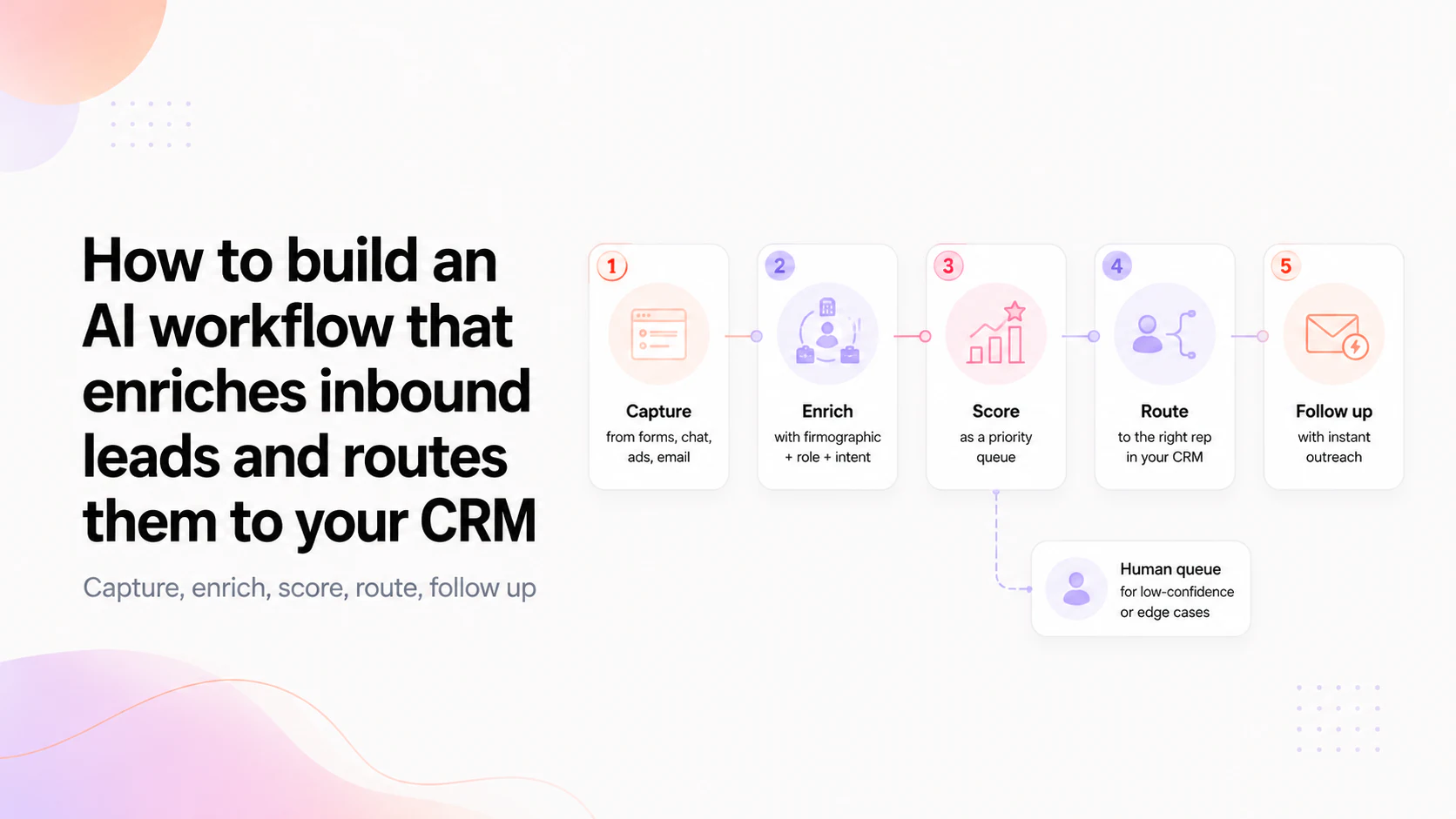
- Captures instantly. Form, chat, email, ad - the lead is caught and structured the second it lands, from every channel, not retyped by hand.
- Enriches. Fills in company, role, size, and fit from your data sources, so the record is complete before a human sees it.
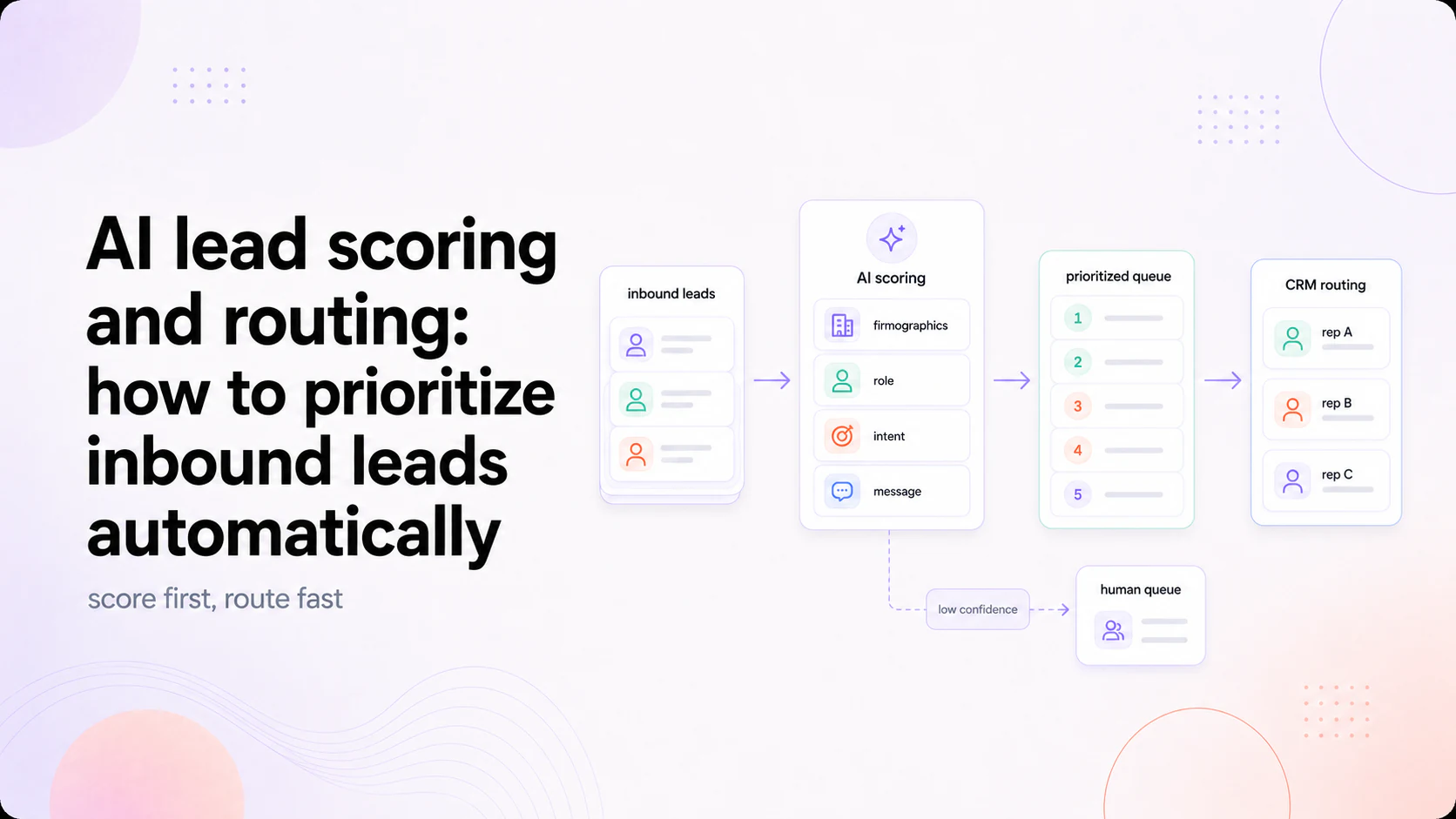
- Qualifies. Scores against your ICP (see our guide to AI lead scoring and routing) and asks one or two clarifying questions when it helps - so reps spend time on leads worth their time.
- Routes and distributes. Sends the lead to the right owner by rule - territory, product, round-robin - and starts the follow-up so nothing waits.
A lead-gen agent earns its place by making sure the leads you already paid for don't die waiting.
Lead generation and lead distribution are one job
Teams treat capture and distribution as separate steps, and the handoff between them is where leads leak. An agent runs both as one motion: the same system that captures the lead is the one that qualifies and routes it, with no manual copy-paste in the middle. That's the difference between a lead answered in minutes and a lead answered tomorrow.
How we build it
We map your real intake first - every channel a lead can come from, your qualification rules, where a human decides. Then we build on .NET with tests, connect to your CRM and tools (like our guide to build an AI workflow to enrich inbound leads and route to CRM), and route under rules you control, with a person in the loop on anything unusual. We measure what matters: time-to-first-contact, share of leads routed correctly, and how many qualified leads reach a rep with a full record. This is where AI automation and agent work overlap - the workflow is the product.
The leads you already have, answered in time
Most teams don't have a lead-volume problem. They have a response-time problem. An agent that captures, qualifies, and routes in real time turns leads you already pay for into conversations, instead of into a backlog.
If leads are slipping between capture and follow-up, that's the workflow to fix first. See how we approach AI agent development, or tell us where your leads go cold.
FAQ
What does an AI agent for lead generation do? It captures a lead the moment it arrives, enriches and qualifies it against your criteria, and routes it to the right rep in real time - with the context sales needs. It closes the gap between form submit and first reply.
Does it actually find new leads? Its job is to make the leads you already generate convert, by qualifying and routing them instantly. It doesn't scrape or buy contacts. The value is speed and completeness.
What's the difference from a Zapier or workflow tool? Simple routing rules work until the logic gets real - messy inputs, qualification judgment, multi-channel capture. An agent handles that and escalates when unsure. For related workflow automation, see AI automation.
Can it route leads by our own rules? Yes. Territory, product, size, round-robin - whatever your model is. The agent enforces it consistently and logs every assignment.
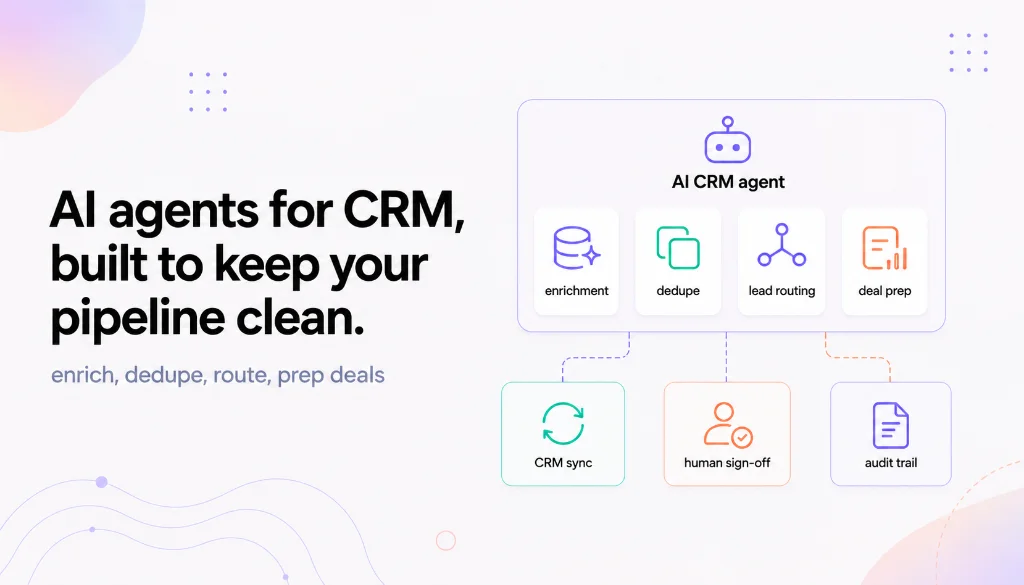
Do you build production agents? Yes, on .NET with tests, guardrails, and an audit trail, connected to your CRM and tools. See AI agent development.
News & Insights
Start here
Bring us the agent that keeps braking
Tell us which workflow eats time, creates errors, or keeps landing back in a human review queue. We map the data, tools, risks, and escalation path before recommending anything.
Tell us the workflow that eats your time. We'll map it, show you a range, and say if automation is even worth it.